

Pub builds that survive chaos
Bracket builds should survive incomplete vision, random fights, and supports who never buy detection. Copying pro VODs is optional. Surviving pubs is not.
Stop copying DreamLeague item builds in pubs
Professional item builds assume coordinated smoke timing, supports who buy detection without being asked twice, and a team that actually groups up when the draft calls for it. Your ranked pub has none of those guarantees, and yet every patch a wave of players copies the exact build order from a tournament VOD and wonders why it falls apart by minute twenty. Bracket builds need to survive incomplete vision, random uncoordinated fights, and a support who spends their early gold on a Courier upgrade instead of an Observer, because that is the actual game you are playing.
Use OpenDota and Dotabuff to spot general trends in item timing and popularity, then simplify aggressively for your own bracket. If a build requires three teammates to execute a coordinated play in order to pay off, it is not a pub build, it is a highlight reel build that happens to occasionally work when the stars align.
The core insight worth internalizing is that professional teams build around removing variance, since they have already controlled for the variance that pubs cannot remove. A pro support does not need to overbuy detection because the team communicates rotations perfectly. Your pub support absolutely does need to overbuy detection, because nobody is calling rotations and the enemy support is walking around your jungle uncontested.
Core rules for chaos pubs
A short list of rules survives more pub games than any specific item sequence, because these rules adapt to whatever chaos your particular game throws at you rather than assuming a fixed scenario. Memorize the list, apply it every game, and adjust the specific items to your hero and role while keeping the underlying logic constant.
- Buy survival before damage the moment your deaths start turning into a feeding streak rather than isolated mistakes.
- Buy detection yourself if it becomes clear nobody else on your team is going to.
- Buy mobility if the enemy has strong catch potential and your team has none to answer it.
- Skip luxury items entirely until your objectives are actually realistic given the current gold and level gap.
- Change your plan the moment the draft counters your original idea, rather than stubbornly finishing a build that no longer fits the game.
These rules matter most precisely when a game feels like it is spiraling, since that is exactly when players default to their comfort build instead of adapting. A carry who keeps building pure damage into a lineup with three disables and zero counterplay from their own team is following a plan that stopped being correct several deaths ago.
Carry build notes for real pubs
Early armor or basic sustain items beat greedy damage rushing if you have already died twice before the ten minute mark, because a dead carry contributes zero value to the game regardless of what their eventual item build would have looked like. The math on early survival items is simple: staying alive to farm is worth more than the marginal damage increase from rushing a core item one or two minutes faster.
Mid game, honestly assess whether Black King Bar or a pure damage item finishes games faster in your specific bracket, since this answer genuinely varies by skill level. Lower brackets often have less reliable disable chaining, making raw damage slightly more valuable relatively speaking, while higher brackets punish a lack of spell immunity far more severely in every teamfight.
Late game, resist the pull toward a sixth pure damage item if your team still has zero detection and the enemy is clearly running invisibility or stacking wards uncontested. A carry with maximum damage output who dies to an invisible hero because nobody on the team can see them contributes nothing in the fight that actually decides the game.
Mid build notes for real pubs
Level timing matters more than luxury items for most mid heroes in pub games, since the level advantage from efficient farming and correct rune usage compounds faster than most item purchases in the laning stage. A mid player obsessing over their next big item purchase while missing easy experience from a poorly managed wave is optimizing the wrong variable.
If you lose your lane, pivot toward utility items that help the broader map rather than doubling down on another nuking item you cannot cast safely from a position of weakness. A losing mid who buys a second high-cost damage item often just dies slightly slower to ganks than one who bought no items at all, while a losing mid who buys mobility or utility can still contribute meaningfully to the rest of the map.
Offlane build notes for real pubs
Aura items and initiation tools win considerably more pub games than flashy individual carry-style items on an offlaner, because the offlane role in pubs is fundamentally about creating space and enabling uneven fights rather than out-farming the enemy carry directly. An offlaner who tries to build like a secondary carry usually ends up competing for resources with their own team's actual carry, which helps nobody.
Your specific job as an offlaner is manufacturing fights that are not even, either through disables that isolate a single enemy hero or auras that swing a group fight in your team's favor before damage numbers even get compared. Building purely for personal damage output usually fails this job description even when the individual item choices look reasonable in isolation.
Support build notes for real pubs
Force Staff, Glimmer Cape, and detection items are not optional luxuries for a support role, regardless of how tight gold feels in a specific game. These items are the actual difference between successfully saving a core's life during a gank and watching that core die while typing an argument in chat about how the support never buys anything useful.
Support gold in pubs is chronically under-spent on defensive utility because supports often feel pressure to contribute kills or damage numbers that show up on the scoreboard. Resist that pressure. A support who buys the correct defensive items and uses them well contributes far more to the win condition than a support chasing personal kill count with an aggressive item build that leaves the team without any saves in a crucial fight.
Using inventory awareness tools
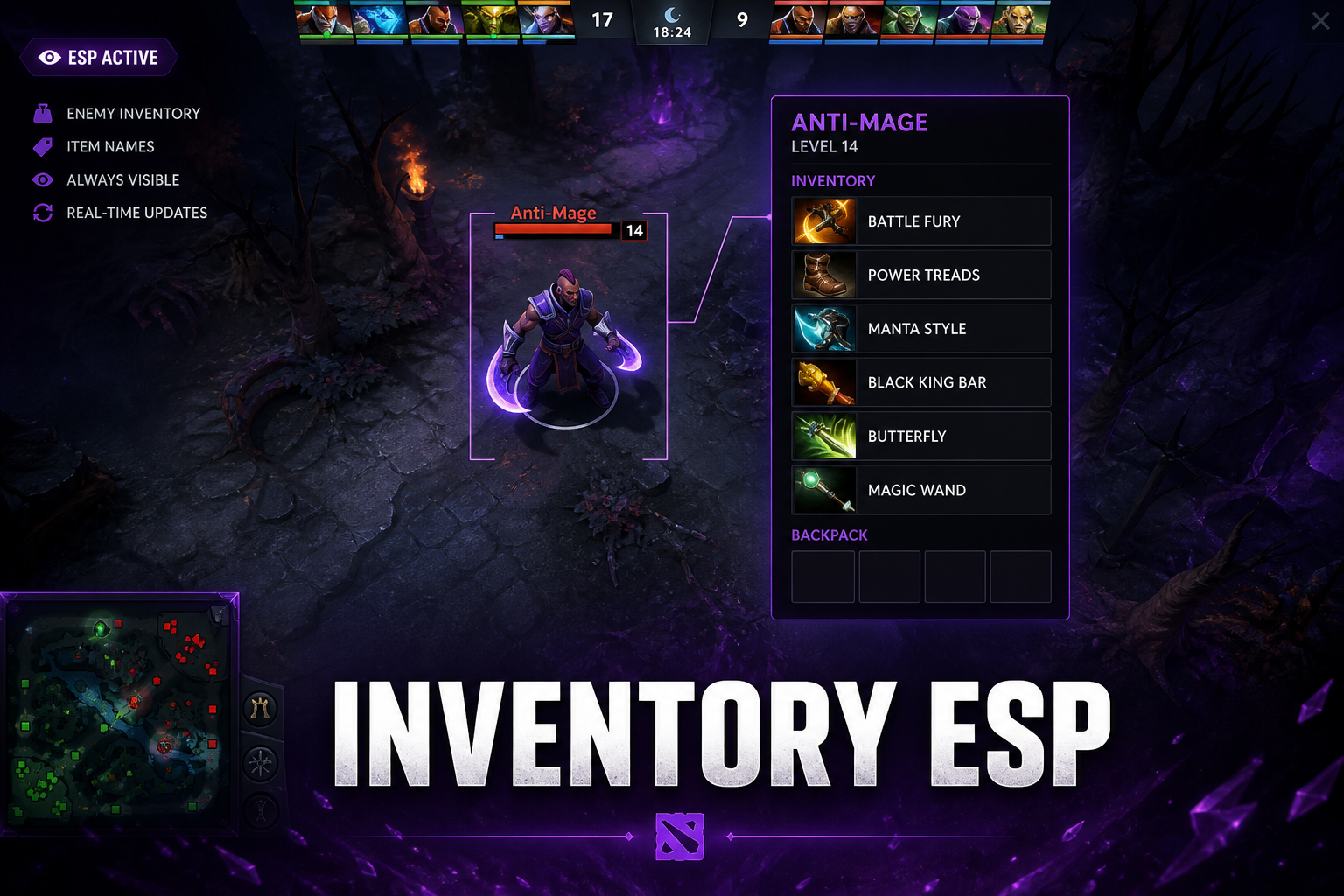
Hero ESP and inventory overlay tools help answer a specific, high-value question during a fight: has the enemy finished Black King Bar yet, or do they still only have a Force Staff and a partial item build. That single piece of information changes whether your team commits to a fight immediately or waits for a better window, and getting it wrong in either direction costs games. Browse Hero ESP details and the features page for a full breakdown of what inventory tracking actually shows during a live match.
If you want to see how this looks in practice before deciding whether it fits your own routine, the demo page has footage showing inventory tracking during real fights. Questions about licenses, setup, and general compatibility are answered on our FAQs page.
Putting the whole build philosophy together
A pub-ready build philosophy is not a fixed item list, it is a decision framework: survival before greed when deaths are mounting, detection as a shared team responsibility rather than one player's job, willingness to break a plan the moment the game reveals it was wrong, and constant reference to the vision and cooldown information from ward vision and cooldown tracking. Apply that framework consistently and your builds will survive far more of the chaos that actually defines a ranked pub, regardless of what the current patch's tier list happens to say.