
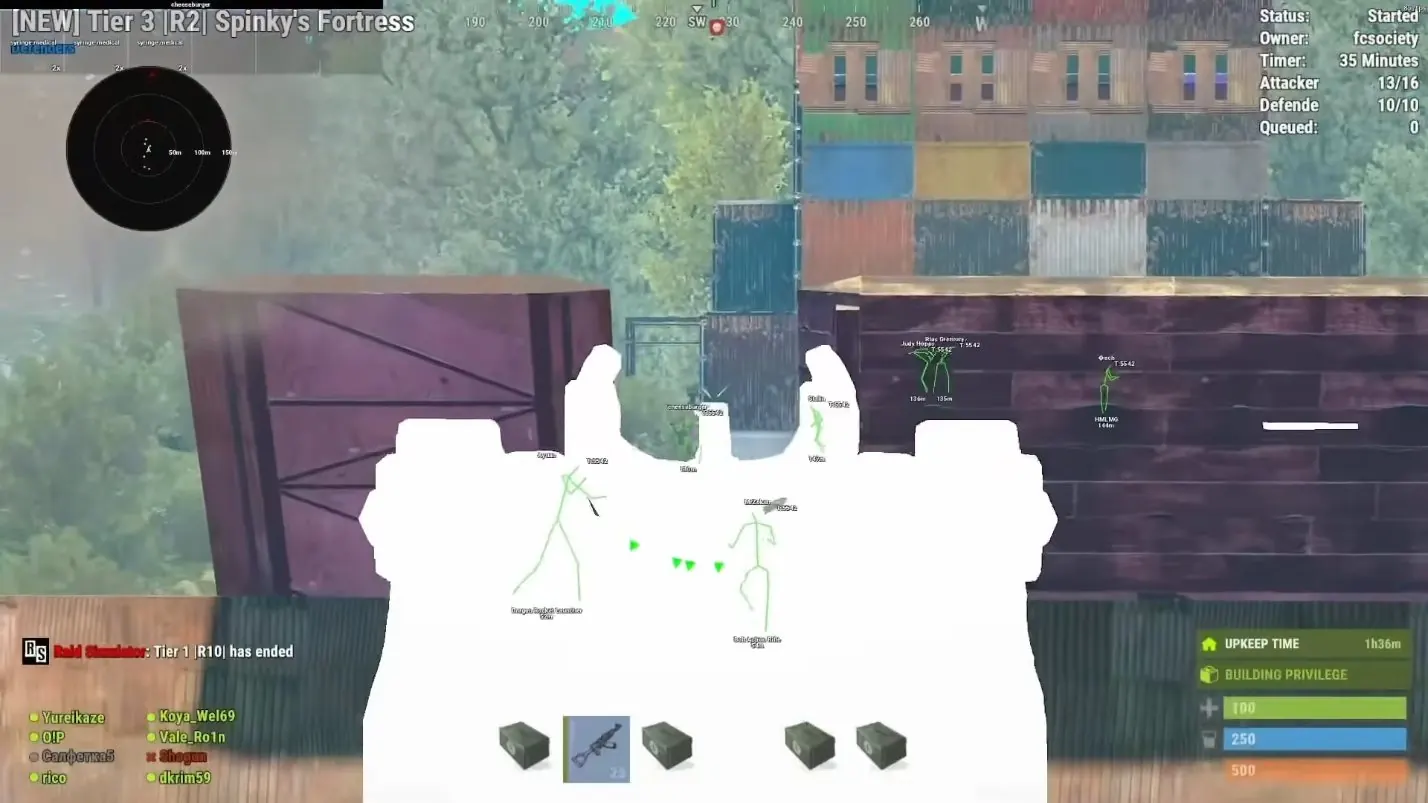

1. Player ESP
Player ESP adds visual information about other players, such as position, name, distance, health, held item, box, or skeleton. Seller implementations and available filters vary.
2. Resource ESP
Resource ESP highlights entities such as stone, metal, sulfur, plants, or collectible items. Long distance and many enabled categories can make an overlay harder to read or affect performance.
3. Item and container ESP
This label usually covers dropped items, loot containers, stashes, or selected inventory objects. Ask whether the seller lists individual filters and current entity support.
4. Sleeper ESP
Sleeper ESP is advertised as identifying offline or sleeping players. It is often grouped with player ESP but may have separate display and distance settings.
5. Aimbot
Aimbot assists targeting. Common listing terms include smoothing, field of view, bone selection, prediction, visibility checks, and distance limits. These options do not make automated aim allowed or ban-proof.
6. No recoil
No-recoil or recoil-control tools compensate for weapon movement. Some listings claim weapon-specific profiles or adjustable compensation. Compatibility can change when weapon behavior changes.
7. Radar
Radar presents nearby entities on a separate two-dimensional view. Confirm whether a listing means an on-screen radar, an external device, or a web-based display because setup requirements differ.
8. Structure and raid ESP
Structure-related labels may include building pieces, tool cupboards, storage, traps, turrets, or raid activity. The exact entities and usable range should be stated rather than assumed.
9. Stream-proof overlay
A stream-proof claim usually means an overlay is excluded from selected capture methods. It does not mean the software is invisible to anti-cheat, and it may not work with every version of OBS, Streamlabs, or other recording software.
10. Loader, updates, and support
Features that need extra requirements
Terms such as DMA, Cloud DMA, driver, spoofer, or second-PC radar can imply additional hardware, cloud accounts, fees, or privileged system access. Get the full requirement and total cost in writing before checkout.
Compare evidence, not feature count
A concise, dated and documented listing is more useful than a long list with no limitations. Compare the seller-listed plans and prices, then read ESP vs aimbot and the ban-risk guide.